Aluminum foil in the freezer: a simple tip to save money

Opening a freezer and finding thick layers of frost is a frustration many people know all too well. What starts as a thin, harmless-looking layer of ice gradually grows into bulky sheets that steal space, jam drawers, and make every opening feel like a small battle. With busy schedules and endless household tasks, defrosting often gets pushed to the bottom of the list. Yet there is a simple shift in perspective—and a small habit—that can make this chore far less daunting and prevent frost from taking over in the first place.


Frost is not just an aesthetic annoyance. As it builds up on the inner walls, it reduces the usable storage space and interferes with the smooth movement of drawers and compartments. Even a well-organized freezer can start to look messy and overfilled once ice creeps into every corner. Over time, this buildup can prevent the door from sealing properly, which compromises temperature stability and food preservation.

When a freezer struggles to maintain the correct temperature, it works harder than necessary. This extra effort often leads to increased noise and higher electricity consumption, quietly driving up energy bills. The appliance may also wear out faster, turning what seems like a minor inconvenience into a long-term cost. All of this contributes to the sense that the freezer is never quite clean or efficient, no matter how often it is reorganized.

Traditional defrosting methods are effective but rarely appealing. The process usually involves unplugging the freezer, removing all food, finding temporary storage, and waiting patiently for the ice to melt. Meltwater must be managed carefully, and the interior needs to be completely dry before restarting the appliance. It is a time-consuming routine that requires planning and uninterrupted time.

Because of these demands, many people delay defrosting until frost becomes impossible to ignore. By then, drawers barely move, space is severely limited, and the task feels even more overwhelming. The freezer turns into a reminder of an unfinished chore rather than a convenient household tool.

Understanding why frost forms and how quickly it accumulates is the first step toward changing this cycle. With small, preventative habits and a smarter approach, it is possible to keep frost under control, reduce the need for full defrosting sessions, and restore ease and efficiency to everyday freezer use.

Related Posts

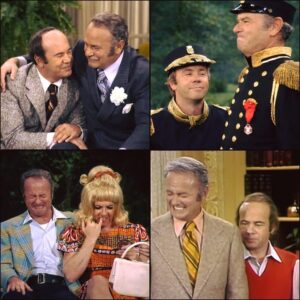
The moment Tim Conway opened his mouth, Harvey Korman was done. What started as a simple sketch spiraled into pure, unscripted chaos — accents, props, and perfectly timed absurdity pushing everything off the rails. And then the striped underwear reveal sealed it. The cast lost control, the audience lost it too — a lightning-in-a-bottle TV moment fans still can’t stop laughing at.

In the glittering golden era of television, few moments have endured the test of time quite like the unforgettable, chaotic brilliance of Tim Conway and Harvey Korman…

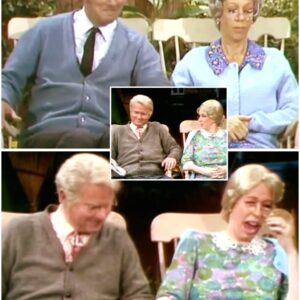
“Comedy gold” barely describes it. On The Carol Burnett Show, Carol Burnett and Harvey Korman lose control during the legendary “Old Folks” sketch. What starts as a sweet, quiet scene explodes when Carol slips in a perfectly timed ad-lib that blindsides Harvey. He tries to hold it together — you can see the fight on his face — but laughter wins. Within moments, they’re both shaking, the script forgotten, as the scene turns into pure, joyful chaos. Decades later, fans still replay it as one of TV’s funniest unscripted moments — warm, wild, and completely unforgettable.

Some moments on The Carol Burnett Show weren’t just funny — they were history being written in real time. In “The Old Folks” sketch, Carol Burnett and…

Tim Conway stepped into what should’ve been a simple window-washing sketch — calm, scripted, harmless. Five seconds later, it was chaos. One slip became a swing, and suddenly he’d taken over everything. Harvey Korman wasn’t acting anymore — he was begging him to stop. The script disappeared, the cast lost control, and the audience roared for 22 unforgettable minutes. Tim didn’t just play the scene. He completely broke it.

This episode was something special. It showcased the unbeatable comedic duo Tim Conway and Harvey Korman, two men whose chemistry could crack up even the most stoic viewer. Tim’s genius…

THE MOMENT TV LOST CONTROL — Tim Conway derails the “Dr. Nose” sketch with one rogue improvised move, sending Harvey Korman into a meltdown no one could stop. What started as a straight-faced medical scene exploded into chaos as Conway unleashed perfectly timed nonsense, pushing Korman past the breaking point and turning the set into uncontrollable laughter — a legendary moment from The Carol Burnett Show that fans still call one of TV’s greatest unscripted disasters.

Some moments in The Carol Burnett Show remain timeless, and “Tim Conway Has to Stop Dr. Nose” is one of those legendary sketches that still makes viewers laugh uncontrollably…

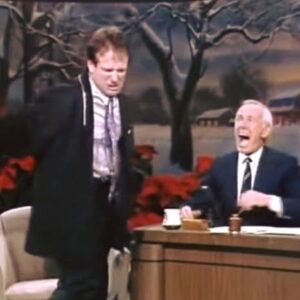
Remember that legendary Christmas episode of The Tonight Show Starring Johnny Carson when Robin Williams stepped onstage and, within minutes, sent Johnny Carson into the most uncontrollable laughter of his career? Williams unleashed a rapid-fire, wildly unfiltered holiday improv so sharp and chaotic that even the unflappable King of Late Night completely broke — wiping tears, gasping for air, and pounding his desk as millions watched. Producers later said they never saw Carson lose himself like that again, and the clip remains one of the most replayed and beloved moments in live TV history.

The legendary pairing of Johnny Carson and Robin Williams consistently produced some of the most chaotic and hilarious moments in Tonight Show history. However, the segment you’re referring to—the “Christmas in San Francisco” bit from their…

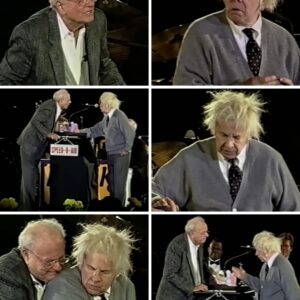
Tim Conway and Harvey Korman Reunite — A Warm Return to Comedy’s Golden Era

The air in the room seemed to vibrate with nostalgia as Tim Conway and Harvey Korman reunited at the Motion Picture & Television Fund home. It was…

Leave a Reply

Your email address will not be published. Required fields are marked *